Why retina screening matters if you have diabetes
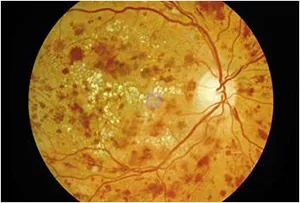
Diabetic retinopathy develops when prolonged high blood sugar damages the blood vessels in the retina. In its early stages it often has no symptoms, which is why people with diabetes are advised to have their retina examined regularly, even if their vision feels normal.
How it's diagnosed
Diagnosis typically involves a dilated eye examination along with OCT (optical coherence tomography) imaging, which allows the ophthalmologist to look for early changes in the retina's blood vessels and detect swelling or fluid build-up that isn't visible otherwise.
Treatment options
- Regular monitoring for early, mild changes
- Retinal laser (photocoagulation) treatment to seal leaking or abnormal blood vessels
- Intravitreal anti-VEGF injections for macular swelling or more advanced disease
- Close coordination with your physician on blood sugar and blood pressure control, which directly affects eye outcomes
Care at Marian Eye Care, Kottayam
Dr. Sheena Susan Andrews (MBBS, MS, DNB, FICO) completed fellowship training in medical retina at Giridhar Eye Institute and leads retina services at Marian Eye Care & Opticals, Kudamaloor & Neendoor, Kottayam — including OCT scanning, retinal laser treatment, and intravitreal injections for diabetic retinopathy and related conditions.
This article is for general information only and is not a substitute for professional medical advice. If you have diabetes, ask your doctor how often you should have your eyes screened.